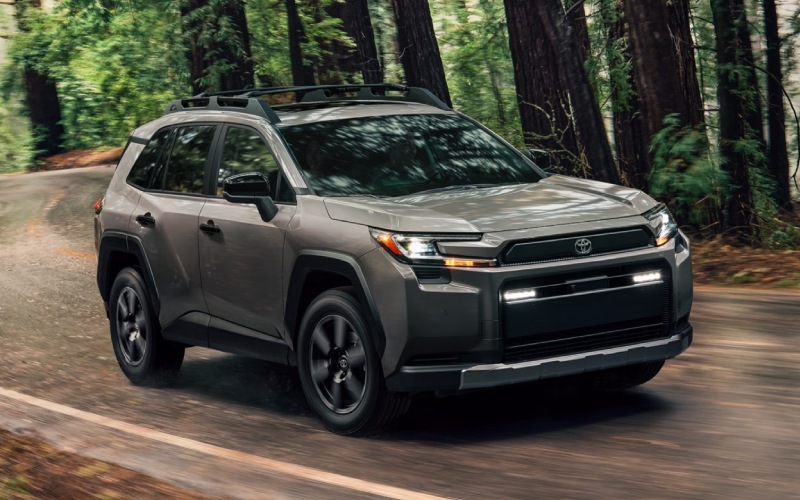
Toyota of Renton - Can the 2026 Toyota RAV4 tow a small camper or boat around Seattle, WA?
The short answer is that the 2026 Toyota RAV4 is engineered for light-duty towing, and with the right setup it can confidently pull many teardrop campers, utility trailers, and small boats around the Greater Seattle area. At Toyota of Renton, we talk with shoppers who want one SUV that handles weekday commuting and weekend getaways without stepping up to a full-size truck. If your plans include a pop-up to Lake Wenatchee or a fishing skiff launched at Gene Coulon Park on Lake Washington, the RAV4’s capability and efficiency make it a smart, do-it-all choice.
Below, we break down what the 2026 RAV4 can tow, what you need to tow safely, and how to think about local terrain—from I-90 climbs over Snoqualmie Pass to tight marina lots around Shilshole—so you can decide if this SUV fits your towing life near Seattle, WA.
What the 2026 RAV4 is rated to tow and why that matters
The 2026 Toyota RAV4 is rated to tow up to 3,500 lbs. When you’re comparing trailers, remember that capacity includes the trailer itself plus cargo, fuel, water, batteries, and accessories. In our experience working with Seattle-area owners, that 3,500-lb ceiling comfortably covers many popular teardrop campers, lightweight pop-ups, small fiberglass campers, single-axle utility trailers, and compact fishing or aluminum boats on a trailer—provided you confirm the real, loaded weight.
Because RAV4 emphasizes efficiency as much as capability, its hybrid architecture provides responsive low-speed torque for moving a trailer out of a driveway or up a launch ramp. The lineup offers multiple drivetrains, including available AWD for added traction when you’re pulling a trailer up wet boat ramps or navigating gravel access roads. And you still get the everyday benefits that make RAV4 a Seattle favorite: up to Est. 47 City/40 Hwy MPG and up to 37.8 cu. ft. of cargo capacity for the gear that does not go on the trailer.
Seattle-area towing examples that fit RAV4’s wheelhouse
To make the numbers real, here are scenarios we often see among drivers based near Seattle, Renton, Bellevue, and the Eastside. Always verify actual weights, but these use cases typically land within RAV4’s capability when properly equipped and loaded:
- Teardrop or micro-camper: Many models, even with a weekend’s worth of gear, remain well under 3,500 lbs loaded.
- Pop-up camper: Lightweight pop-ups are commonly trailer-friendly for RAV4 and easier to pull over I-90 grades due to lower wind drag.
- Small boat with outboard: An aluminum fishing skiff or compact runabout on a single-axle trailer can often fit the rating—great for Lake Washington and Lake Sammamish trips.
- Dual personal watercraft: Two PWC on a single trailer may work, but confirm curb weights, fuel, and add-ons before you hitch up.
- Utility trailer for home projects: Lumber, landscaping supplies, or bicycles typically remain within limits if you mind payload and trailer weight.
Wind and hills matter around here. Crossing the SR 520 Bridge, dealing with gusts on I-5, or climbing toward Snoqualmie Pass will ask more of any tow vehicle. Keep speeds moderate, leave extra following distance, and use lower gears on long descents to manage heat and maintain control.
What you need before you tow with a 2026 RAV4
Getting the right equipment is as important as picking the right trailer. Our service team can help you outfit your RAV4 and walk you through a test hookup in our drive.
- Proper hitch and receiver: Use a hitch rated for at least the trailer’s gross weight and the RAV4’s tow rating; match the correct ball size.
- Wiring harness: Ensure a compatible wiring harness for brake lights and turn signals; test lights before every trip.
- Trailer brakes when required: Heavier trailers may require their own brakes; confirm based on actual weight and Washington State rules.
- Weight distribution basics: Keep the load balanced and secure; avoid excessive rear bias that can cause sway.
- Tongue weight check: A commonly recommended practice is to target roughly 10–15% of the total trailer weight on the hitch; verify with a scale.
- Tire pressure and condition: Set both vehicle and trailer tires to spec; recheck when leaving Seattle’s lower elevations for mountain drives.
- Mirrors and visibility: Confirm you have a clear line of sight down both sides of the trailer; add mirror extensions if needed.
For trim selection, we can walk you through the advantages of available AWD for wet ramps and gravel lots. If you plan frequent camping or backroad access, the Woodland trim’s all-terrain tires and integrated Rigid Industries® LED fog lights can bolster confidence when light turns to dusk and conditions get dusty or foggy.
Driving tips for local roads, ramps, and ferries
Greater Seattle adds a few wrinkles to towing. City streets can be tight, weather can change quickly on the passes, and ferry lines require low-speed maneuvering. Here are technique reminders we share during new-owner walkthroughs:
- Give yourself space. Wider turns and extra lane room help avoid curb strikes and trailer tire scrubbing in neighborhoods like Ballard or Capitol Hill.
- Modulate speed on grades. On I-90 climbs, maintain steady throttle; on descents, downshift early to reduce brake heat.
- Watch wind on bridges. Crosswinds on I-5 or SR 520 can push a light trailer; slow down and keep inputs smooth.
- Boat ramp etiquette. Back down ramps at idle, minimize sudden steering, and use AWD when surfaces get slick.
- Ferry staging. Leave more following distance and accelerate gently; trailers amplify every start-stop.
Remember that the 2026 RAV4 also brings modern tech to your drive. The standard 12.3-in. digital gauge cluster helps keep key info within sight, and the available 12.9-in. Toyota Audio Multimedia system supports wireless Apple CarPlay® and Android Auto™ compatibility so you can navigate to launch sites, trailheads, or campgrounds without juggling a phone.
What not to tow—and when to step up
If your plans include a larger travel trailer, a heavy dual-axle cargo trailer, or a boat-and-trailer combination that pushes past 3,500 lbs when fully loaded, you should consider a different Toyota tow platform. We are happy to help you compare options in our showroom if your gear list grows—our team will point you to the right match so towing stays relaxed and safe.
Even if your use case is light-duty today, think about the “add-ons” you may want later: full water tanks, an extra generator, or bikes on a rear rack can nudge a setup past the intended envelope. Planning for a reasonable buffer beneath the 3,500-lb limit keeps the experience stress-free across Seattle’s varied terrain.
Finally, take advantage of RAV4’s everyday versatility. With up to 37.8 cu. ft. of cargo volume behind the second row, you can leave bulky items in the vehicle and reduce trailer load. That not only helps you stay within limits but can also improve stability in blustery conditions near the water.
When you are ready, visit us at Toyota of Renton. We can help you confirm trailer fitment, install the right hitch and wiring, and walk you through a test hookup and brake-light check before you leave the lot. If you want extra confidence before towing over the pass or heading toward Whidbey Island, our technicians can also perform a quick inspection so you start the trip with peace of mind.
Frequently Asked Questions:
Can the 2026 Toyota RAV4 really tow 3,500 lbs up Snoqualmie Pass?
Yes—when properly equipped and within its 3,500-lb rating, the RAV4 can tow over I-90. Keep speeds moderated on grades, use lower gears on descents, and leave a safety buffer beneath the maximum if you frequently travel steep, long climbs.
Do I need AWD to launch a small boat around Seattle?
AWD is not strictly required for all ramps, but it helps on slick, algae-coated, or uneven surfaces, and when pulling out with a loaded boat. If you regularly visit marinas or launch sites, AWD adds confidence.
How do I know if my trailer is under the RAV4’s limit?
Check the trailer’s gross vehicle weight rating (GVWR) and weigh your setup loaded with fuel, water, batteries, and gear. Add tongue weight to vehicle payload planning, and aim to leave a margin below 3,500 lbs to account for real-world variations.
Does the hybrid system need special steps for towing?
No special steps are needed beyond standard towing practices. The RAV4’s hybrid system is designed to balance power and efficiency automatically. Follow the owner’s manual for best practices and service intervals, and allow extra cool-down time after sustained climbs.
What RAV4 features help when towing in tight Seattle parking areas?
The available Advanced Park can assist with maneuvering the vehicle into a space when you are unhitched, and the standard 12.3-in. digital gauge cluster keeps key information in view. For trailering specifically, practice slow, steady inputs and consider mirror extensions for better visibility.
Can I still expect great fuel economy while towing?
Towing increases aerodynamic drag and weight, so your fuel economy will drop versus unhitched driving. The RAV4’s hybrid efficiency helps minimize this penalty compared to many gas-only SUVs, but plan for lower mpg when pulling a trailer—especially at highway speeds or in gusty conditions.
Thinking about towing with a 2026 Toyota RAV4 around Seattle, WA? Stop by Toyota of Renton. We will help you choose the right trim and towing accessories, set up your hitch and wiring, and make sure your weekend starts as smoothly as your weekday commute. With bold styling, an Enhanced Hybrid System, available AWD, and Toyota Safety Sense™ 4.0 standard, RAV4 brings capability with character—ready for your next launch, campsite, or mountain pass.
Request more 2026 Toyota RAV4 information
Categories:
Toyota RAV4