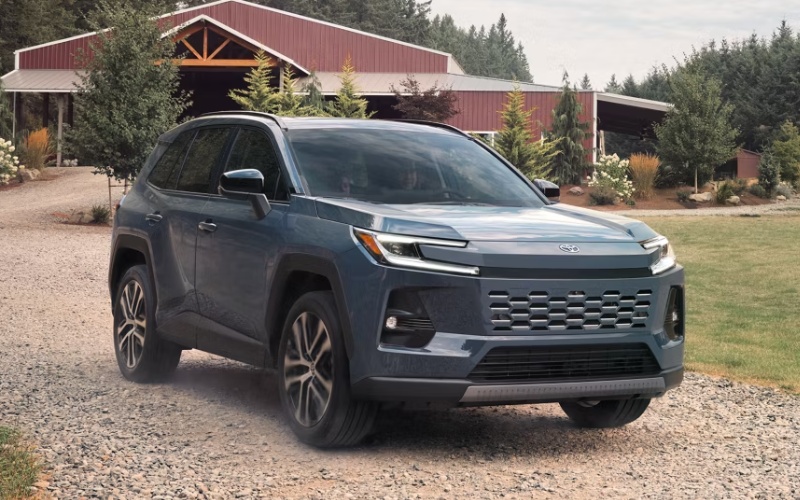
Toyota of Renton - Which SUV delivers better all-around capability for real Northwest driving — the 2026 Toyota RAV4 or 2026 Hyundai Tucson near Kent, WA?
When drivers compare compact SUVs for Pacific Northwest life, one question rises to the top: which model really handles everyday hills, rain-glossed pavement, gravel trailheads, and tight urban parking better? Looking at the 2026 Toyota RAV4 and the 2026 Hyundai Tucson, you’ll find two well-equipped, tech-forward contenders. The key differences come down to standard hybrid power in RAV4, its towing headroom, and a mix of driver-assist features designed to make both daily commutes and weekend getaways feel easier.
This guide walks through capability, interior tech, and safety confidence so you can decide which strengths matter most for your routine. We’ll also cover what to test on a back-to-back drive so you feel the contrasts for yourself on familiar roads around Kent, WA.
Everyday capability that matches how you drive
RAV4 takes a decisive step by making hybrid standard across its lineup. That means you get consistent low-end torque for smoother starts on inclines and predictable power delivery in traffic—without a learning curve. Tucson splits its lineup among gas, hybrid, and plug-in hybrid options, which gives you choice but also means you need to pinpoint trims to achieve the same smooth, quiet takeoff you’ll notice immediately in a hybrid RAV4. If you tow a compact trailer or carry heavier adventure gear, RAV4’s up-to-3500-lb rating on properly equipped models gives welcome headroom over Tucson’s 2750-lb maximum.
When pavement ends, RAV4’s Woodland trim stands out with factory all-terrain tires, raised roof rails with cross bars, and integrated Rigid Industries® LED fog lights—trail-friendly touches you’ll appreciate on washed-out gravel or rutted approaches. Tucson’s XRT brings rugged styling and capability-minded gear, and available HTRAC AWD inspires confidence on rain-slick streets, but the RAV4 Woodland’s hardware advantage is tangible where tires meet the trail.
Parking, low-speed stress, and the tech that smooths it out
Tight curbsides and crowded lots can fray patience on busy days. RAV4 answers with available Advanced Park, a system that takes the wheel for hands-free parking while you stay inside and supervise. In the thick of congestion, available Traffic Jam Assist can help on controlled-access highways under 25 mph with a Drive Connect subscription—lightening your workload when speeds ebb and flow. Tucson counters with available Remote Smart Parking Assist on select trims, which is helpful for pulling in or out of tight spots when you’re outside the vehicle. Both approaches have merit, yet RAV4’s in-cabin, hands-free parking option is the type of confidence-builder many drivers prefer for an everyday toolkit.
Another practical touch is RAV4’s available Drive Recorder, an integrated dashcam that quietly adds a layer of security and accountability—particularly reassuring in urban areas and crowded trailhead lots. Tucson’s camera technologies focus on visibility and parking assistance but do not provide a built-in drive recorder.
Cabin tech and comfort for long stretches
RAV4’s available 12.9-in. Toyota Audio Multimedia touchscreen and standard 12.3-in. digital gauge cluster present info clearly and let you interact by touch or voice. On upper trims, you can add JBL® Premium Audio and Dual Qi-compatible wireless charging—two perks you’ll feel daily. Tucson’s panoramic-style curved display with twin 12.3-in. screens looks stunning, with intuitive menus and strong connectivity. The difference is how RAV4’s tech suite meshes with other conveniences, like Toyota Safety Sense™ 4.0, to create a cohesive, confidence-forward experience.
Both SUVs serve five passengers well and provide flexible cargo options. If maximum cargo volume with seats folded is a top priority, Tucson’s expanded figure stands out. If you want a deliberately simple, ergonomic layout that makes the most of frequent in-and-out errands and mixed driving, RAV4’s control logic and storage cubbies feel purpose-built.
How to test the differences on your drive route
Set aside time for a back-to-back drive covering three short loops: a stretch of freeway with merging and lane changes, a hilly neighborhood with stop signs, and a tight parking-lot scenario. Bring cargo you typically carry to check liftgate clearance and cargo-floor practicality. In RAV4, look for the hybrid’s smooth pull from a stop and how Advanced Park and the available panoramic camera views reduce parking anxiety. In Tucson, try HTRAC AWD on a wet incline and explore the curved display’s menu depth. Both feel composed—notice where one reduces mental load more consistently for you.
- Freeway loop for merging and lane changes
- Hilly neighborhood with several stop signs
- Tight parking-lot practice with parallel and back-in maneuvers
Frequently Asked Questions:
Which SUV is better for towing small adventure gear?
RAV4, when properly equipped, is rated up to 3500 lbs, giving it an edge for small trailers, lightweight campers, or heavier weekend gear. Tucson’s maximum is 2750 lbs on select configurations.
Do both offer advanced driver-assistance features?
Yes. RAV4 features Toyota Safety Sense™ 4.0 and available aids like Traffic Jam Assist and Advanced Park. Tucson’s Hyundai SmartSense includes robust lane, forward-collision, and highway assists. The difference is RAV4’s integrated Drive Recorder and in-cabin hands-free parking option.
What should I look for on a test drive to feel the hybrid difference?
Pay attention to low-speed torque when starting from a stop, smoothness rolling onto freeway speeds, and how quickly power arrives on hills. In RAV4, hybrid torque makes starts and urban maneuvers feel natural and quiet, especially in mixed conditions.
Ultimately, both SUVs can fit Northwest routines well. If you want hybrid smoothness every time without hunting for the right trim, RAV4’s standard hybrid lineup simplifies the choice. If you prioritize maximum folded cargo volume and a dramatic curved display, Tucson is compelling. For most drivers who juggle commutes, rainy-day errands, and the occasional gravel road, RAV4’s blend of electrified torque, available parking tech, and trail-minded Woodland hardware adds up to easier days and more confident weekends.
Ready to compare them side by side on familiar roads? Our team is here—Toyota of Renton, serving Bellevue, Kent, and Burien—with routes and demos that highlight the subtle differences you’ll notice most in daily life.
Request more 2026 Toyota RAV4 information
Categories:
Toyota RAV4