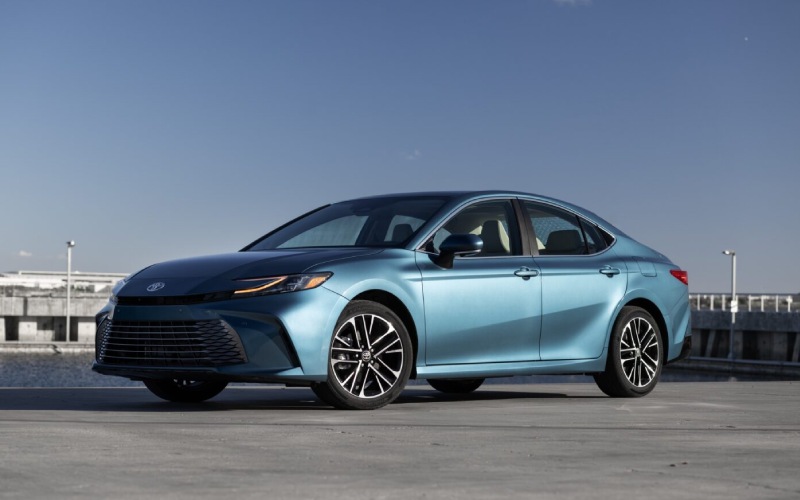
Toyota of Renton - Which sedan handles rain and hills better around Burien, WA — 2026 Toyota Camry or 2026 Hyundai SONATA?
When shoppers ask which midsize sedan inspires more confidence in the Pacific Northwest’s wet, hilly conditions, two names quickly rise to the top: the 2026 Toyota Camry and the 2026 Hyundai SONATA. Both offer advanced driver assistance, crisp screens, and quiet cabins. The difference you feel on steep driveways, slick crosswalk paint, and cambered neighborhood streets comes from how each car is engineered beneath the surface. That’s where Camry’s hybrid-first platform with available Electronic On-Demand All-Wheel Drive (AWD) sets it apart from SONATA Hybrid’s front-drive layout.
Let’s unpack what that means for daily life around Burien, Seahurst Park, and your I-5 and WA-518 connections. With Camry, every trim is hybrid, so you get strong low-speed torque, silent EV creeping in parking lots, and smooth, quick response merging onto the highway. Add the available AWD and the system can direct torque to the rear wheels the moment the fronts sense slip, which helps you pull away cleanly on a rain-slick incline. SONATA splits its lineup between gas and hybrid; AWD is available on certain gas trims, but SONATA Hybrid remains front-wheel-drive. The hybrid system itself is efficient and refined, yet when the weather turns or roads tilt, having the option for hybrid plus AWD can be the difference between easing forward and scrabbling for traction.
Drivetrain and traction where it matters
Camry’s available AWD was designed specifically to complement its all-hybrid powertrain. The delivery feels transparent—no fussy toggling or menus required. You press the accelerator, it gathers itself, and you move. In contrast, SONATA’s HTRAC AWD capability lives on select gas trims, so if you want a SONATA Hybrid for its efficiency, you’ll give up the extra confidence that rear-axle torque can bring on wet, leafy surfaces. In everyday terms, this shows up when you’re trying to roll out of a parallel spot on a crowned residential street or thread through an uphill four-way stop during a drizzle.
Cabin tech and everyday ease
Both sedans deliver intuitive technology. Camry brings an available 12.3-in Toyota Audio Multimedia touchscreen with wireless Apple CarPlay and Android Auto, natural-voice commands for quick tasks, and an available 12.3-in digital gauge cluster. The available Head-Up Display (HUD) is one of those features you don’t know you need until you drive with it—glanceable speed and nav cues keep eyes forward when spray reduces visibility. SONATA matches with a panoramic curved display linking its 12.3-in touchscreen and available 12.3-in digital instrument cluster, plus Bluelink+ for remote features. Premium sound is available in both—JBL® in Camry, Bose in SONATA—so your podcasts and playlists stay part of the routine without overpowering conversation.
How safety tech supports real Northwest driving
Active safety is robust on both sides. Toyota Safety Sense™ 3.0 equips Camry with a Pre-Collision System with Pedestrian Detection, Lane Tracing Assist, and Full-Speed Range Dynamic Radar Cruise Control, among others. Standard Blind Spot Monitor (BSM) with Rear Cross-Traffic Alert is a daily helper in tight lots near the Town Square. Hyundai SmartSense brings a similarly deep roster to SONATA, including Lane Keeping Assist, Smart Cruise Control with Stop & Go, and, on select trims, Highway Driving Assist. The differentiator again is traction: safety features do their best work when the car can use every bit of available grip, which is exactly what Camry’s hybrid-plus-AWD combo is set up to do.
Key differences summarized
- Hybrid strategy: Camry is hybrid-only across all trims; SONATA splits gas and hybrid lines.
- AWD availability: Camry offers Electronic On-Demand AWD with its hybrid; SONATA Hybrid is FWD only.
- Low-speed control: Camry adds a driver-selectable EV Mode for quiet, short-distance electric driving; SONATA Hybrid manages EV use automatically without a dedicated button.
- Driver focus: Camry’s available HUD projects key info in your line of sight; SONATA emphasizes a panoramic curved display inside the cabin.
From behind the wheel, these distinctions show up as calm, decisive motion in the Camry when you need it most—like easing onto wet, paint-striped on-ramps or taking an uphill right turn with confidence while traffic compresses. SONATA remains a very comfortable, tech-rich sedan, particularly in higher trims, but drivers who want hybrid efficiency and AWD in one package will find a simpler path with Camry.
Who should choose which?
If you’re a commuter who regularly faces fast-changing conditions—intermittent showers, slick leaves, and short, steep side streets—the Camry’s available AWD with its hybrid system is a compelling advantage. If you’re drawn to SONATA’s ultramodern cabin and are comfortable picking between gas AWD or hybrid FWD, you’ll find a lot to like. Still, for a single solution that covers traction and efficiency in one build, Camry’s the more straightforward fit.
Frequently Asked Questions:
Does the 2026 Toyota Camry Hybrid offer AWD while the 2026 Hyundai SONATA Hybrid does not?
Yes. Camry pairs its all-hybrid lineup with available Electronic On-Demand All-Wheel Drive (AWD). SONATA offers HTRAC AWD only on certain gas trims; SONATA Hybrid remains front-wheel-drive.
Is a Head-Up Display available on both sedans?
Camry offers an available Head-Up Display that projects key info into your line of sight. SONATA emphasizes its panoramic curved display; a HUD is not listed among its current features.
Do both cars support wireless Apple CarPlay and Android Auto?
Yes. Both models offer wireless Apple CarPlay and Android Auto for easy, cable-free smartphone integration.
How does each car help in heavy traffic?
Camry’s hybrid torque and smooth e-CVT make creeping and short bursts feel natural, while Toyota Safety Sense™ 3.0 with Full-Speed Range Dynamic Radar Cruise Control supports steady gaps. SONATA’s Smart Cruise Control with Stop & Go offers similar assistance, especially on well-marked highways.
As you weigh your choice, a short back-to-back drive answers a lot of questions quickly. Visit Toyota of Renton—serving Bellevue, Kent, and Burien—for a test loop that includes hills, neighborhood turns, and highway merges so you can feel how traction and hybrid tuning change the way a sedan handles the Northwest.
Our team at Toyota of Renton can also dive deeper into features like the EV Mode button for short, quiet moves and the available JBL® system for rich, balanced sound. Bring your typical route, and we’ll tailor the drive so you experience what matters to you most—confidence, calm, and the right kind of capability for every mile.
Request more 2026 Toyota Camry information
Categories:
Toyota Camry